Conditions & Treatments
Brachymetatarsia Lengthening
Surgical correction for short toe deformity — restoring function, eliminating pain, and improving the natural appearance of your foot.
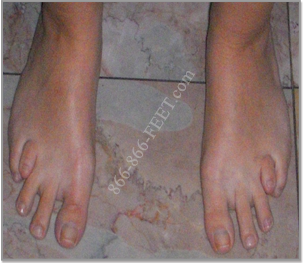
What Is Brachymetatarsia?
Brachymetatarsia surgery, performed by one of the nation’s leading podiatrists, Dr. Sean Ravaei, is a safe and efficient cosmetic foot surgery offered for patients in Los Angeles, Beverly Hills, Inglewood, Huntington Beach, Inland Empire, Wilmington, and neighboring areas. Brachymetatarsia is a condition in which one of the five metatarsals (long bones of the foot) is noticeably short. This short bone results in a shortened toe. Brachymetatarsia is most commonly found in the fourth toe of the foot, and can occur in both feet. This happens in 72% of cases. If brachymetatarsia occurs in more than one toe, the condition is known as brachymetapody.
Brachymetatarsia often results from the early closure of the growth center of a metatarsal or metatarsals. Other metatarsals continue to grow, though. Because the toe is shortened, it cannot handle the appropriate amount of weight when standing. Therefore, the longer toes take on a bigger load than the short one. This causes a thickened formation on the bottom of the toe. As the shorter toe moves upward, the longer toes crowd under it, causing pain and discomfort. There can also be an increase in calluses and pain under the surrounding area of the metatarsals. Along with the pain, many patients complain about the unattractive appearance of the toes and are ashamed to reveal their feet to anyone. This self-conscious feeling can lead to certain psychological issues such as depression.

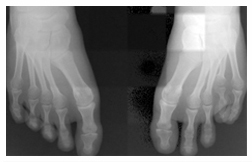
Brachymetatarsia occurs 25 times more often in females than in males, with a rate of 1/1820 in females to a rate of 1/4586 in males. It is usually not apparent at birth but can become visually obvious at four years of age to 15 years of age.
Non-Surgical Relief
For short-term relief of pain, patients with brachymetatarsia may use shoes that have a greater depth, which allow the shortened toe more room to move. Because of the calluses that form, padding in the shoes is another way to relieve discomfort.
Surgical Treatment Options
There are three main surgical treatments used to correct brachymetatarsia and lengthen the toe(s).
The most common procedure to correct this anomaly is called gradual lengthening. In this procedure, the patient is taken to the operating room and a device is attached to his/her bone. The patient on a daily basis turns a knob on this device and lengthens the bone. After the bone is healed the patient is taken back to the operating room and the device is removed. The problem with this procedure is that it leaves a lengthy and unsightly scar and two operations are needed to fix this problem.
The second procedure involves removing a bone graft from a different region of the body and adding that bone to the short bone. The problem with this procedure is that it requires two locations for the incision. Also, the patient may be required to stay off his/her feet longer than other procedures.
The procedure that Dr. Ravaei prefers is called one stage lengthening. In this procedure, only one incision is made and the bone is lengthened with the use of screws, wires or sutures, according to physician discretion. Following this procedure, the patient is sent home with crutches and advised to return for a follow up in one to five days. Most patients are allowed to bear weight within a few weeks.
As with any foot surgery, all of these procedures require patients to adhere to the doctor's instructions regarding post-operative care. Not following these directions could lead to less-than-perfect results.
Why Choose Dr. Ravaei for Brachymetatarsia Surgery
Dr. Ravaei is a board-certified foot and ankle specialist who has performed over 7,000 surgical procedures. He trained at Temple University, Eglin Air Force Base, and Cooper University Hospital, and served as Chief of Podiatric Surgery at Saint Joseph's Hospital in Los Angeles. Brachymetatarsia correction is technically demanding — outcomes depend heavily on the surgeon's experience with metatarsal osteotomy, internal fixation, and soft tissue management.
Dr. Ravaei offers consultations at five Southern California locations — Beverly Hills, Inglewood, Huntington Beach, Inland Empire, and Wilmington — with same-day appointments available.
Brachymetatarsia FAQ
Brachymetatarsia can cause pain in the metatarsal area because adjacent toes bear excessive weight the short toe cannot support. Calluses, chronic pressure, and difficulty with footwear are common. Some patients are primarily bothered by the cosmetic appearance with minimal pain.
Non-surgical options can manage discomfort but cannot correct the bone shortening. Surgical lengthening is the only permanent solution. Conservative care is appropriate for patients not yet skeletally mature or those with mild symptoms.
Surgery is typically recommended after skeletal maturity — around age 14–16 in girls and 16–18 in boys — to ensure growth plates have closed. Dr. Ravaei evaluates each patient individually for optimal timing.
When brachymetatarsia causes documented functional impairment — pain, calluses, gait abnormalities — many plans including Medicare, Aetna, and Blue Cross/Blue Shield may cover the procedure. Purely cosmetic cases may not be covered. Dr. Ravaei's office will help verify your coverage before treatment.
Brachymetatarsia refers to shortening of a single metatarsal. Brachymetapody describes shortening of multiple metatarsals simultaneously. Both are treated surgically with similar techniques, though multi-bone cases require more extensive planning.
One-stage lengthening requires 6–8 weeks in a surgical boot, return to regular shoes around 10–12 weeks, and full activity at 3–4 months. Gradual lengthening takes several months total. Dr. Ravaei will give you a specific timeline at your consultation.
Correct Your Short Toe Today
Dr. Ravaei is one of Southern California's most experienced podiatric surgeons for brachymetatarsia correction — restoring balance, eliminating pain, and improving the appearance of your feet.